Real leather or synthetic? How to tell in the shop
Real leather vs synthetic shoes: telling them apart takes no special training, because the label, your eyes, your fingers and your nose usually tell you all you need. This guide explains how to read the European pictograms, which signs separate leather from synthetic materials in the shop and what each material gives you day to day, including price and lifespan.
Reading the label
In the European Union, a 1994 directive requires a label showing the material of the three main parts of a shoe, and it applies in Belgium too. The label is on at least one shoe of the pair: printed on the insole, stuck under the tongue, embossed into the sole or sewn inside the upper.
A first set of pictograms, sometimes replaced by words, shows the part of the shoe:
- the upper: the outside of the shoe, above the sole;
- the lining and insole: everything that touches your foot inside;
- the outer sole: the part that touches the ground.
A second set shows the material of each part:
| Pictogram | Material | What to remember |
|---|---|---|
| A stretched animal hide | Leather | Real leather, of animal origin |
| A pictogram derived from the leather one | Coated leather | Leather with a thicker finishing layer |
| A woven pattern | Natural or synthetic textile | Canvas, knit, mesh |
| A diamond | Other materials | Rubber, plastic, polyurethane, faux leather |
The label names the material that makes up at least 80% of the surface of the upper and of the lining, and at least 80% of the volume of the outer sole. If no single material reaches that threshold, the two main ones are given. A trainer marked “leather” for the upper may therefore still have a few textile panels.
Be wary of words printed freely on the box or the sole. “Faux leather”, “PU”, “plant-based leather” or “vegan” all describe a material that is not animal leather. The Italian marking “vera pelle” does mean “genuine leather”, but the regulatory label is what counts.
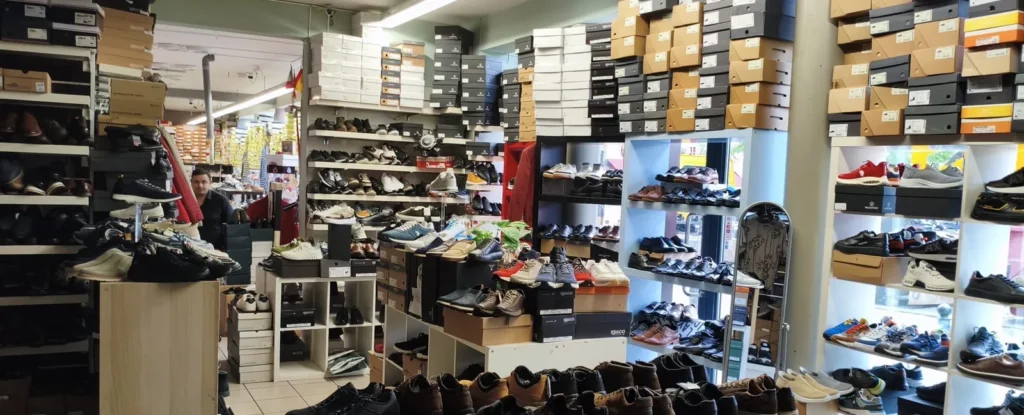
Look, feel, smell: real leather vs synthetic shoes
No readable label, or would you rather check for yourself? Three senses are enough, and none of them harms the shoe.
Look
Leather is a skin: its grain shows small pores and fine irregularities, never quite the same from one spot to the next. Synthetic materials often carry a printed fake grain, as regular as a repeated pattern. Look at the edges too, around the collar or a cut-out: leather shows a fibrous cut edge, almost like suede, while synthetic shows a layer of plastic on a fabric backing.
Feel
Press the upper gently with your thumb. Leather forms fine wrinkles that fan out around your thumb and fade slowly. Synthetic material dents evenly or makes a sharp crease, then springs back all at once.
Smell
Leather has a warm, recognisable smell, while synthetic tends to smell of plastic. Bear in mind that a new pair fresh out of the box may also smell of glue, whatever it is made of.
Forget the water drop and the flame you see online. Treated leather makes water bead up just like plastic, and a flame damages the shoe either way.
The full check takes about thirty seconds:
- the label: the animal hide next to the upper pictogram;
- the grain: irregular, with pores;
- the cut edge: fibrous, with no visible fabric;
- the thumb test: fine wrinkles that fade slowly;
- the smell: leather, not plastic.
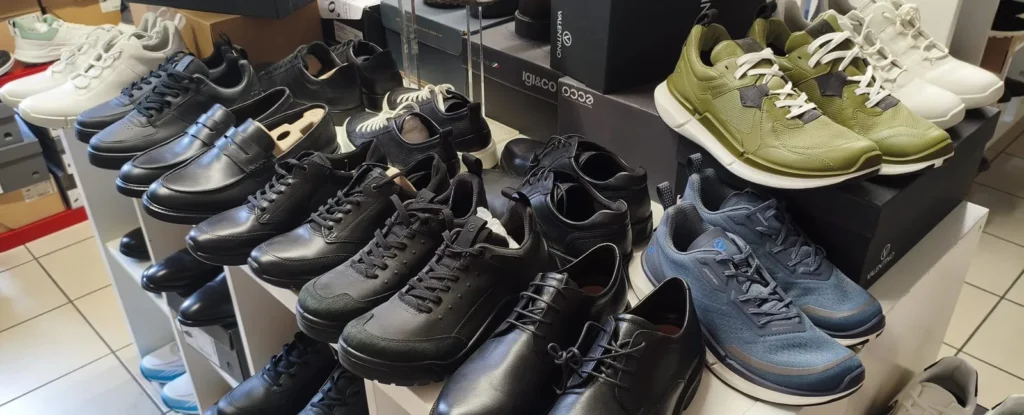
Pros and cons of leather
Leather is breathable: it lets some moisture through and keeps your feet drier over a long day. It moulds to your foot after a few hours of wear and grows more comfortable with time. Well cared for, it ages handsomely and lasts for years.
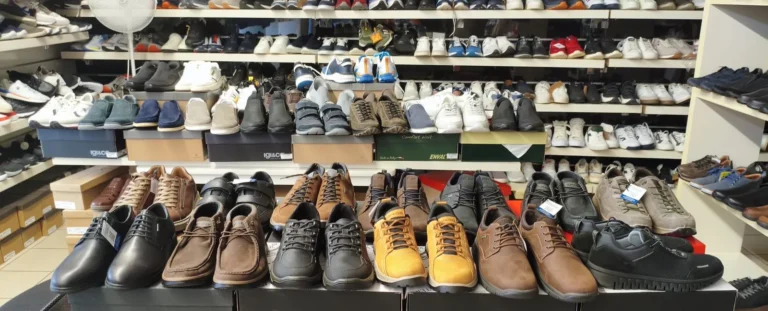
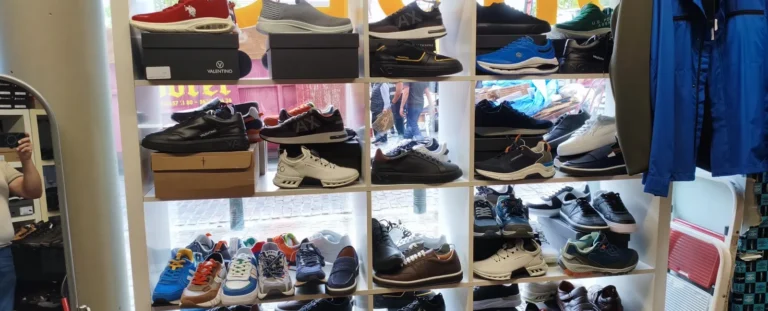
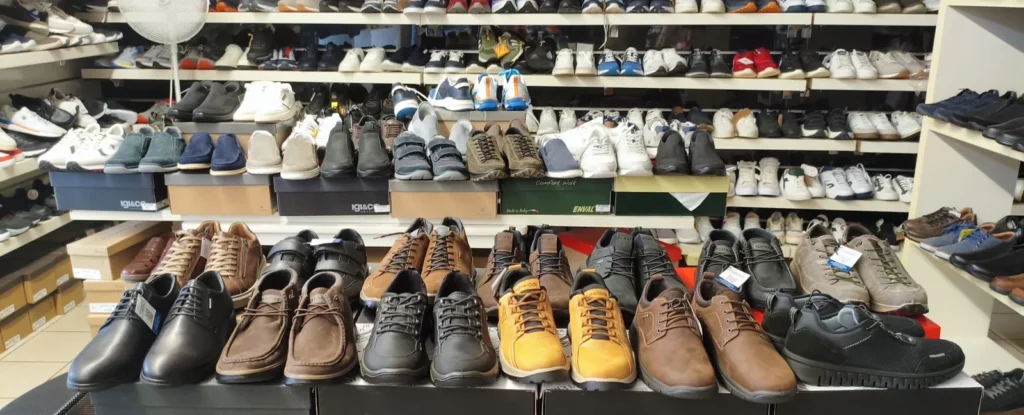
That is why it remains the standard for dress shoes for work, a wedding or a party. Several brands on our shelves are known for their leather: Ecco for its supple leather, Naturino and Primigi for children’s shoes.
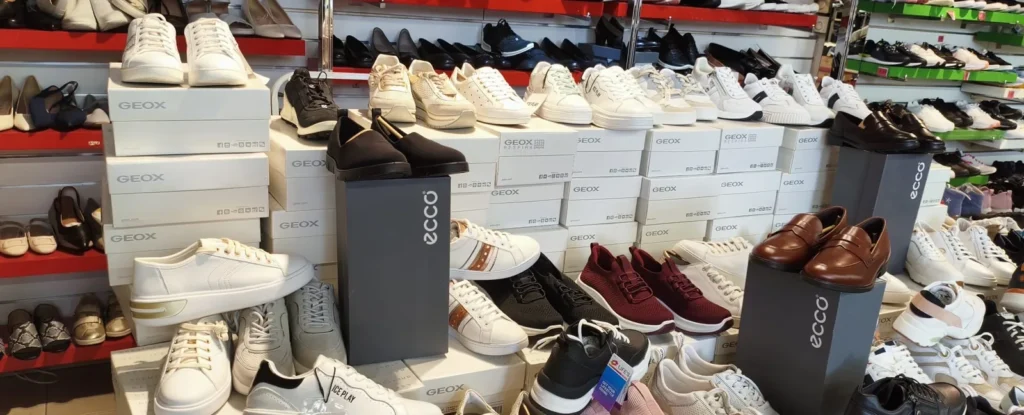
Leather does ask for some care: regular cream for smooth leather, a brush and a spray for suede and nubuck. It is all explained in our guide to leather shoe care. Without protection, leather does not like water, and a leather pair is often slightly heavier than a synthetic one.
Pros and cons of synthetic materials
Synthetic does not mean bad. These materials are light, clean up with a damp cloth and cope with a shower better than untreated leather. They allow bright colours, glossy finishes and lower prices.
Mesh, the open-weave textile on sporty sneakers, is even airier than leather. And if you prefer not to wear animal materials, synthetic is the logical choice.
The limits are well known. Coated synthetic material breathes less, so your feet warm up faster. It does not mould to your foot: a pair that pinches when you try it on will still pinch three months later. Over time, the surface layer can crack or peel at the creases, and it is hard to repair.
Price and lifespan
Leather costs more at the till. Over time the sums change: a well-kept leather pair often lasts several seasons, while a cheap synthetic pair is sometimes worn out after one. What matters is the price per day of wear, not just the figure on the receipt.
| Criterion | Leather | Synthetic | Textile and mesh |
|---|---|---|---|
| Breathability | Good | Poor | Very good |
| Moulds to the foot | Yes | No | A little |
| Rain | Protect with a spray | Copes with a shower | Lets water in without a membrane |
| Care | Brush, cream, spray | Damp cloth | Soft brush |
| Lifespan | Long with good care | Shorter | Varies |
| Purchase price | Higher | Lower | Varies |
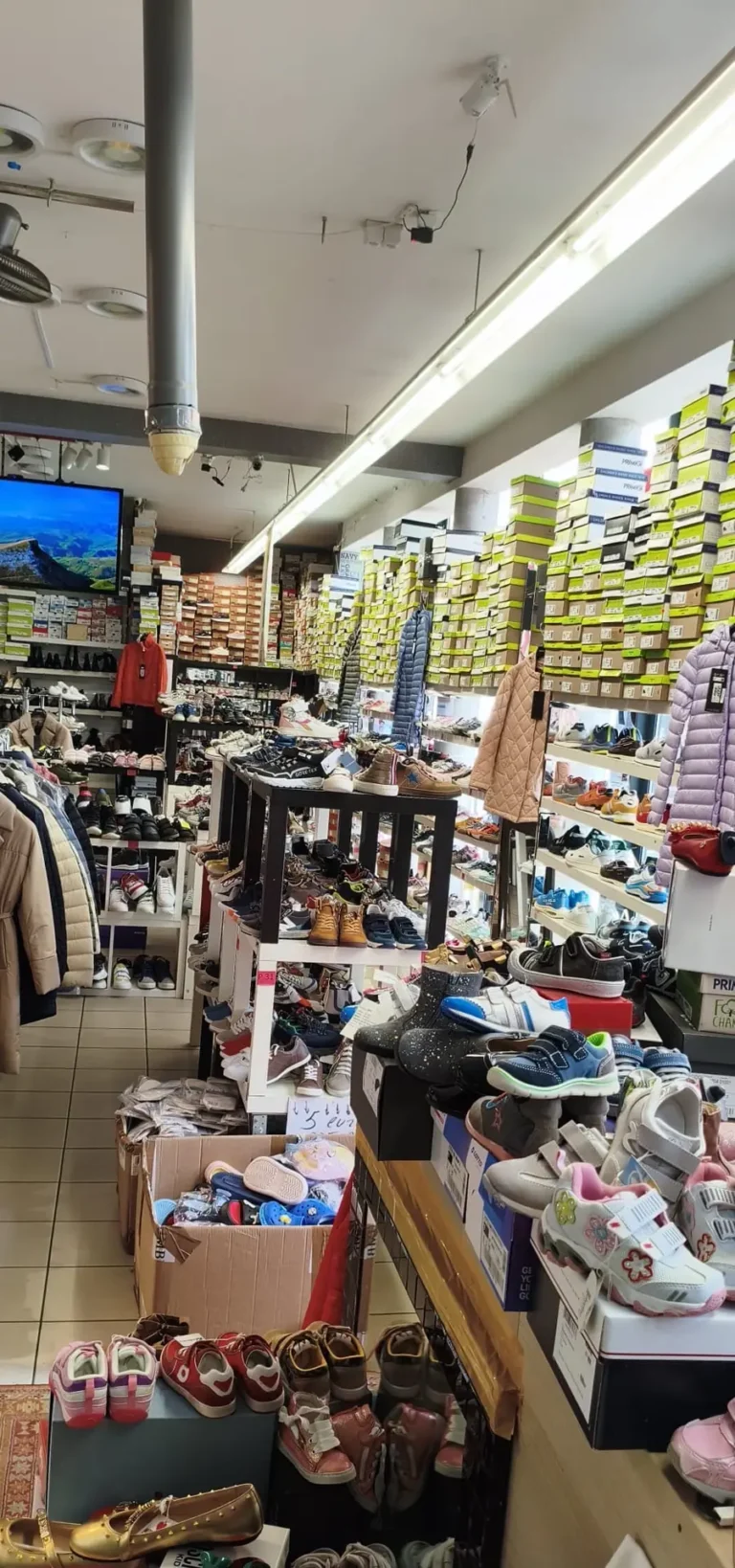
In our shop, branded leather stays affordable. We buy in bulk in Italy, directly from large chains, and sell these new shoes, in their original boxes, at fixed outlet prices all year round, from about €20 to €150. Find out how our outlet works.
Seen a price online that looks too good to be true? Read our guide to cheap branded shoes first.
The easiest way to compare is in person. Come to Place du Jeu de Balle 40, in the Marolles, any day from 10 am to 3.30 pm, Sundays included: pick two pairs you like, read the labels and try them on. Directions are on our store and getting here page.
Frequently asked questions about leather and synthetic shoes
How can I tell if a shoe is real leather?
Check the label first: an animal hide next to the upper pictogram means the outside is leather. Then look for an irregular grain, a fibrous cut edge and the smell of leather.
What does the diamond symbol on a shoe label mean?
The diamond stands for “other materials”: rubber, plastic, polyurethane or faux leather. You often see it next to the outer sole, because most soles are made of rubber or synthetic material.
Is coated leather real leather?
Yes. It is leather with a thicker finishing layer, glossier and easy to wipe clean. It has its own pictogram on the label.
Is faux leather poor quality?
Not necessarily. It is light, easy to clean and cheaper, but it breathes less and ages less well than leather. For a pair you wear every day, leather is often the better investment.